

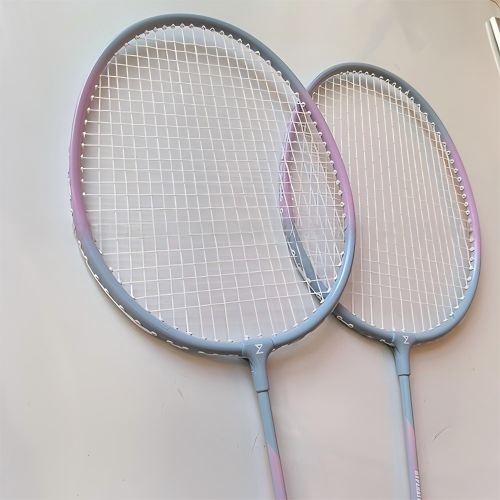
Carbon fiber has become one of the most important materials in modern sports equipment, and badminton rackets are no exception.
As players demand lighter weight, higher stiffness, better power transfer, and more precise control, carbon fiber continues to replace
traditional materials in premium and performance-oriented badminton rackets. For manufacturers, retailers, and content publishers,
understanding why carbon fiber is the future material for badminton rackets is essential for creating informative,
SEO-friendly content that meets both user intent and search engine expectations.
In the badminton industry, carbon fiber is valued for its exceptional strength-to-weight ratio, structural stability, vibration
reduction potential, and design flexibility. These properties make it possible to engineer rackets that are fast through the air,
responsive on contact, and durable under repeated high-intensity play. Whether used in the frame, shaft, or integrated composite
structure, carbon fiber supports the continuous evolution of racket performance.
This guide provides a complete overview of Carbon fiber badminton rackets, including definition, material characteristics, benefits,
common specifications, performance comparisons, manufacturing considerations, and market trends. It is written in clear, English SEO
format and designed for direct insertion into a blog post, category page, or industry content page.
Carbon fiber is a high-performance synthetic material made from thin strands of carbon atoms bonded together in a crystalline
structure. These fibers are typically woven and combined with resin to form a carbon fiber composite. In badminton rackets, this
composite is used to create lightweight yet highly rigid structures that improve performance and consistency.
Unlike basic metal or low-grade composite materials, carbon fiber can be engineered into different layers, patterns, and thicknesses.
This allows racket designers to control flexibility, stiffness, torsional resistance, and overall balance. As a result, carbon fiber
is widely used in modern rackets aimed at intermediate, advanced, and professional players.
In practical terms, carbon fiber badminton rackets are often described using terms such as graphite racket,
carbon composite racket, or full carbon badminton racket. Although the wording may vary, the core
idea is the same: the racket is built with advanced composite technology to achieve better speed, control, and durability.
The popularity of carbon fiber in badminton is not a trend based on marketing alone. It is driven by measurable material advantages.
A badminton racket must move quickly, strike accurately, absorb shock efficiently, and resist deformation during repeated high-speed
swings. Carbon fiber addresses these requirements better than many conventional materials.
One of the biggest reasons carbon fiber is becoming the future material for badminton rackets is its ability to deliver excellent
performance without adding unnecessary weight. Lightweight construction helps players accelerate the racket faster, improve reaction
time at the net, and generate sharper wrist movement during quick exchanges. At the same time, carbon fiber can be made stiff enough
to support powerful smashes and accurate shot placement.
Another major advantage is design control. With carbon fiber composites, manufacturers can adjust racket feel by changing layup
orientation, resin systems, tube geometry, and reinforcement zones. This flexibility supports a wide range of player styles, from
control-focused defensive players to power-oriented attackers.
| Advantage | Description | Player Benefit |
|---|---|---|
| Lightweight Construction | Carbon fiber has a high strength-to-weight ratio, allowing rackets to remain very light. | Faster swings, easier handling, improved reaction speed. |
| High Stiffness | The material resists bending and deformation during impact. | Better power transfer, sharper response, improved shot precision. |
| Durability | Composite structure helps resist fatigue and repeated stress. | Longer usable life under regular play and training. |
| Vibration Dampening Potential | Carbon fiber can reduce unwanted shock and vibration when properly engineered. | More comfortable feel and less strain on the arm. |
| Design Flexibility | Different layers and weave patterns can be used for custom performance. | Rackets can be tuned for power, control, or balance. |
| Stable Performance | Composite structures remain consistent across repeated use. | Predictable shot behavior and reliable racket feel. |
To understand why carbon fiber is considered the future material for badminton rackets, it helps to compare it with older or more
traditional material categories. While different racket materials have their own strengths, carbon fiber offers the most balanced
combination of speed, strength, and advanced playability.
| Material Type | Weight | Stiffness | Durability | Performance Level |
|---|---|---|---|---|
| Aluminum | Moderate | Low to medium | Moderate | Entry-level |
| Steel | Heavy | High | High | Basic recreational use |
| Wood | Heavy | Low | Low to moderate | Outdated for performance badminton |
| Carbon Fiber Composite | Very light | High | High | Intermediate to professional |
Compared with aluminum or steel, carbon fiber enables a much faster swing and better maneuverability. Compared with wood, it offers
dramatically improved structural stability and consistency. This is why carbon fiber dominates the performance segment of the badminton
racket market.
A badminton racket is a precision tool. Small changes in frame stiffness, shaft flex, balance point, or weight distribution can have
a major impact on performance. Carbon fiber supports these fine adjustments exceptionally well.
A lighter racket head can move faster through the air, which is crucial for fast rallies, defensive blocks, drive exchanges, and
quick net play. Carbon fiber enables reduced overall racket weight without sacrificing too much strength.
Stiffer carbon fiber frames and shafts help transfer more of the player’s energy into the shuttlecock. This means less energy loss
during impact and better results for smashes, clears, and attacking shots.
Carbon fiber construction can create a very stable racket face. Stability is important because it helps maintain accuracy when players
hit off-center or under pressure. Better stability means better shot control.
In badminton, response time matters. Carbon fiber rackets often feel crisp and quick, allowing players to react instantly during fast
rallies and changes in direction.
Since carbon fiber rackets are generally lighter and easier to accelerate, players may experience less arm fatigue over long sessions.
This can be especially useful in training, doubles play, and tournament conditions.
Carbon fiber badminton rackets come in many configurations. The right specification depends on the player’s skill level, playing style,
and physical preference. The following table summarizes common specifications found in the market.
| Specification | Common Range | Performance Impact |
|---|---|---|
| Weight Class | 2U, 3U, 4U, 5U | Lower weight improves speed and maneuverability. |
| Balance Point | Head-light, even balance, head-heavy | Affects power, speed, and control feel. |
| Shaft Flex | Flexible, medium, stiff, extra stiff | Changes shuttle repulsion, timing, and shot feel. |
| Frame Material | Carbon fiber composite, graphite composite | Determines stiffness, durability, and weight. |
| String Tension | Approximately 18–30 lbs depending on racket design | Influences power, control, and sweet spot feel. |
| Grip Size | Varies by market and model | Impacts comfort, wrist movement, and handling. |
In badminton rackets, the frame and shaft serve different performance functions. Carbon fiber can be used in both areas, but the design
goals may differ.
The frame must be stable, aerodynamic, and strong enough to handle string tension and impact stress. Carbon fiber
supports frame rigidity while keeping weight low. A strong frame also helps maintain consistency and reduce distortion during hits.
The shaft influences flex and energy return. A carbon fiber shaft can be engineered to be stiff for powerful players or
more flexible for players who prefer easier shuttle lift and a smoother feel. Shaft composition is one of the most important aspects of
racket customization.
Because carbon fiber can be layered and oriented in multiple directions, it is ideal for creating rackets with distinct zones of
reinforcement. For example, a racket can be designed with extra stiffness in the head area and tuned flex in the shaft for a more
balanced playing experience.
The badminton market has changed significantly over the years. Today’s players expect equipment that is lighter, faster, more durable,
and more specialized than ever before. Carbon fiber fits these expectations well.
One major trend is the demand for high-speed gameplay. Doubles badminton in particular has become increasingly fast,
making quick racket handling essential. Carbon fiber helps players defend, counterattack, and transition more efficiently.
Another trend is the demand for equipment personalization. Players want rackets matched to their style and level.
Carbon fiber composites allow product developers to offer different stiffness levels, balance profiles, and weight classes without
redesigning the entire structure from scratch.
A third trend is the focus on performance durability. Frequent players want rackets that maintain feel and structure
over time. Carbon fiber is a strong choice because it resists many forms of wear better than lower-grade materials when properly
manufactured.
The feel of a badminton racket is a combination of weight, balance, shaft response, frame stiffness, and vibration behavior. Carbon
fiber affects all of these factors.
These qualities are especially important for advanced players who rely on timing, placement, and rapid decision-making. However, even
recreational players can benefit from the easier handling and improved comfort of a carbon fiber badminton racket.
The production of carbon fiber rackets involves more than simply using a premium material. The final performance depends on the quality
of the composite system and manufacturing process.
Key factors include fiber orientation, resin quality, curing temperature, mold precision, joint reinforcement, and quality control.
A well-made carbon fiber racket should have uniform layering, consistent wall thickness, and strong bonding between components.
Different manufacturing techniques can also influence the result. Some rackets are made with advanced hollow structures, integrated
joint systems, or aerodynamic profiles designed to reduce drag. These features are often easier to implement with carbon fiber than
with older materials.
| Manufacturing Factor | Why It Matters | Impact on Racket Quality |
|---|---|---|
| Fiber Orientation | Controls stiffness and directional strength. | Affects power, control, and structural stability. |
| Resin System | Holds fibers together and transfers load. | Influences durability and feel. |
| Curing Process | Hardens and stabilizes the composite. | Impacts strength consistency and product lifespan. |
| Mold Precision | Defines the shape and aerodynamic structure. | Determines balance, symmetry, and finish quality. |
| Quality Control | Ensures each racket meets design requirements. | Reduces defects and performance variation. |
The term carbon fiber is often used broadly, but in practice, there are different grades and composite formulations. While exact material
naming varies by manufacturer and market, the overall goal is always to optimize performance.
| Carbon Fiber Type | General Characteristics | Typical Use |
|---|---|---|
| Standard Carbon Fiber | Reliable strength and lightweight properties. | Mid-range and performance rackets. |
| High-Modulus Carbon Fiber | Higher stiffness and more advanced response. | Premium rackets for stronger, faster play. |
| Graphite Composite | Common composite term used in racket marketing. | General performance and all-around models. |
| Reinforced Carbon Layup | Additional structural support in key zones. | High-performance and specialized rackets. |
Carbon fiber badminton rackets are suitable for a wide range of players, but they are especially beneficial for those who value
performance-oriented equipment.
While carbon fiber rackets are widely associated with higher-performance segments, the material is now used in many models across
different price and skill categories. This broad adoption further supports the idea that carbon fiber is the future material for
badminton rackets.
For content strategy, the following keyword themes are highly relevant to this topic and can help improve search visibility when used
naturally in headings, body copy, image alt text, and metadata:
These keywords should be distributed naturally throughout the page rather than forced into every paragraph. Search engines tend to
reward content that is comprehensive, readable, and aligned with real user intent.
| Use Case | Why Carbon Fiber Works Well | Typical Advantage |
|---|---|---|
| Competitive Matches | Lightweight and responsive performance supports fast decision-making. | Speed and shot precision. |
| Training Sessions | Durability and consistent feel support repeated practice. | Stable learning experience. |
| Doubles Play | Fast handling helps with drives, blocks, and quick interceptions. | Reaction speed and control. |
| Singles Play | Balanced or head-heavy carbon designs can improve power generation. | Smash strength and court coverage. |
| Recreational Play | Lighter rackets can reduce strain and improve enjoyment. | Comfort and ease of use. |
The future of badminton racket development is closely tied to advanced composite materials, and carbon fiber is expected to remain a
central part of that evolution. As material science improves, carbon fiber rackets may become even lighter, stronger, and more precise.
Manufacturers are likely to continue refining composite layering, structural reinforcement, and aerodynamic shaping to meet the
growing performance demands of players.
We can also expect continued innovation in hybrid composite structures, where carbon fiber is paired with other advanced materials to
optimize feel, reduce vibration, or improve durability. The focus will likely remain on delivering rackets that combine speed, power,
and control in one high-performance package.
In summary, carbon fiber is not just a premium material option; it is the foundation of modern badminton racket engineering. Its
lightweight nature, high stiffness, durability, and versatile design potential make it the ideal material for the next generation of
badminton rackets.
Carbon fiber has become the leading material choice in badminton racket design because it meets the sport’s most important
performance requirements: speed, control, durability, and customization. Compared with traditional materials, carbon fiber offers a
better balance of lightweight handling and structural strength, making it suitable for modern players at nearly every level.
For anyone researching why carbon fiber is the future material for badminton rackets, the answer is clear. Carbon
fiber enables better engineering, better performance, and better long-term value in a rapidly evolving sports market. As badminton
continues to become faster and more technical, carbon fiber will remain at the center of racket innovation.
```
この Web サイトでは、お客様に最高のエクスペリエンスを提供するために Cookie を使用しています。


 English
 Español
 Pусский
 Français
 한국어
 العربية
 हिन्दी
 Tiếng Việt
 中文



 電話
コメント
(0)