

Unit price answers a narrower question than most buyers think. A total cost of ownership model â freight, duty, failure rates, payment exposure and the cost of switching â usually reorders a shortlist of badminton rackets suppliers within an hour of being built. This guide shows you how to build the model once and reuse it on every award.
Price-only decisions survive because they are easy: one number, one comparison, one winner. They also explain a remarkable share of sourcing regrets, because the costs that decided against them never appeared in the comparison. A total cost of ownership model fixes the comparison â and it needs building only once.
As a manufacturer based in China, æå·ä¹æª¬è¿åºå£æéå ¬å¸ (www.factoryracket.com) supplies badminton rackets, shuttlecocks, tennis rackets and related products to customers in more than forty markets. In this guide we explain what actually determines quality in this category, how to assess a factory before you commit, and how to build a supply relationship that holds up over years of repeat ordering.
Before you send a request for quotation, be precise about what you are buying. These are the questions that separate a professional sourcing decision from a hopeful one.
What is the production capacity and current lead time? A factory that cannot state monthly capacity in units cannot forecast reliably.
Which quality standards apply, and can they evidence compliance? Ask for BWF Laws of Badminton, ISO 9001 documentation rather than a verbal claim.
Is material traceability documented? Certificates of material origin prevent costly surprises.
What is the defect rate and how are returns handled? Ask for historical data, not a policy statement.
Can they customize to your market's specification? Voltage, sizing, labelling and packaging often differ by country.
What after-sales support is included? Spare parts availability and technical support determine lifetime cost.
What is the total landed cost? Freight, duty and durability matter more than FOB price.
Quality in badminton and racket sports equipment is the sum of four things: material selection, manufacturing precision, assembly consistency, and testing discipline. A product can look identical to a competitor and behave completely differently after six months in service if any one of these is weaker.
Material grade: the raw material must match the specification, with certificates to prove it.
Manufacturing precision: tolerances must hold across the production run, not just the sample.
Assembly consistency: repeatable processes prevent batch-to-batch variation.
Testing discipline: functional and safety testing must be routine, not exceptional.
For buyers, the practical implication is that you should evaluate capability rather than appearance. A well-equipped factory with documented processes will out-perform a low-cost workshop every time, even if the sample products look the same.
We recommend auditing five dimensions before the first paid order.
Ask for facility size, equipment list, monthly output, and the number of production lines. A factory that can describe its bottleneck process understands its own capacity. Request photos or a live video walkthrough of the production floor.
Confirm certification such as BWF approval, ISO 9001:2015 and ask to see the internal inspection records. A genuine quality system produces documents: incoming material checks, in-process checks, and final inspection reports.
Understand where raw materials come from and how they are verified. Vertically integrated suppliers control more of the quality chain and are less exposed to sub-supplier problems.
Ask which tests are performed in-house and which are outsourced to third parties. For export markets, third-party test reports from recognised laboratories carry more weight than internal claims.
Evaluate responsiveness during the quotation stage â it is a good predictor of post-sale behaviour. Ask about spare parts availability, technical documentation, and warranty terms in writing.
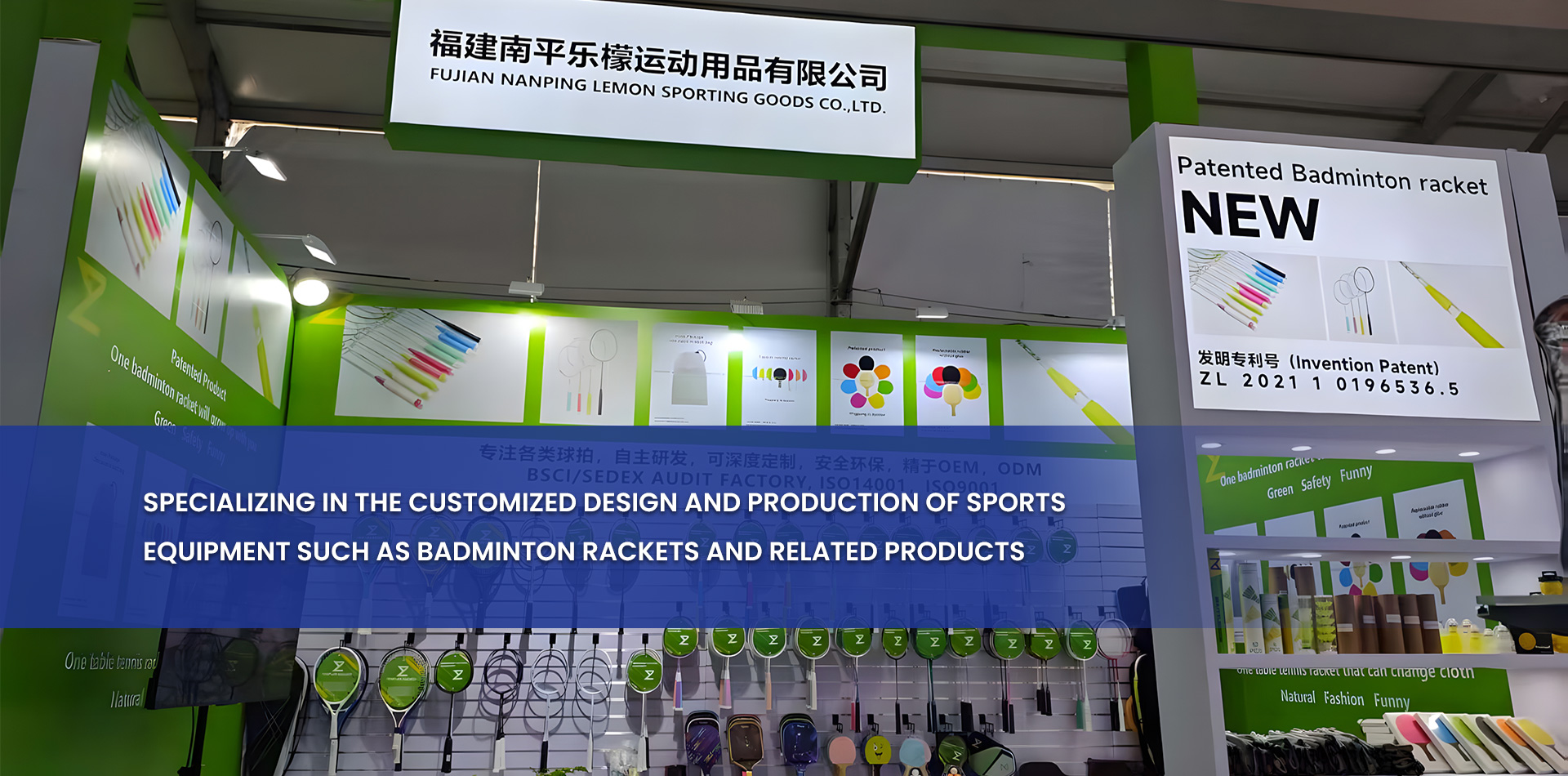
Most buyers eventually want their own branding, and the best time to discuss it is before the first order. Typical customization includes product sizing, colour, labelling, packaging, and documentation.
Product customization: dimensions, capacity, voltage and configuration tailored to your market.
Branding: logo marking, silk-screen printing, embossing or laser marking.
Packaging: neutral, retail-ready or private-label cartons with your barcode and compliance text.
Documentation: user manuals and compliance statements in your market's language.
Discuss minimum order quantities for customized runs early, because decoration and tooling often set a higher MOQ than the base product.
Unit price is only one part of the equation. The lowest quote frequently carries the highest total cost once durability, freight and returns are included.
| Cost Factor | What to Compare | Hidden Risk |
|---|---|---|
| Unit price | FOB per unit | Ignoring specification differences |
| Durability | Service life | Premature failure and warranty claims |
| Freight | Volumetric weight | Light but bulky shipments cost more |
| Duty and compliance | HS code and certification | Clearance delays |
| Returns | Defect rate | Reputational damage |
| Support | Spare parts and service | Downtime for your customer |
Build a landed-cost model and negotiate on the total. Suppliers respect buyers who understand their cost drivers because it signals a long-term relationship.
The best pricing and priority allocation go to buyers who order predictably. Share a rolling forecast, place consistent orders, and give clear feedback on quality. Factories reward reliable partners with better lead times and preferential treatment when capacity is tight.
It also helps to visit the factory when practical. A single visit reveals more about capability than months of email.
Not every supplier is the same kind of business. Understanding the model helps you choose the one that fits your needs.
| Supplier Type | Control Over Quality | Price Level | Best For | Main Risk |
|---|---|---|---|---|
| Direct factory | Highest | Competitive | Volume buyers | Higher MOQ |
| Trading company | Medium | Higher | Small or mixed orders | Less quality control |
| OEM/ODM partner | High | Competitive | Brand owners | Development time |
| Distributor | Low | Highest | Urgent small orders | Limited customization |
For most buyers building a brand or a stable catalogue, a direct factory with genuine customization capability offers the best balance of quality control, price and flexibility.
Depending on your destination market, several standards and certifications may apply to badminton and racket sports equipment. Confirming them early prevents costly compliance surprises.
BWF Laws of Badminton: confirm the factory can supply documentation for this standard where it applies to your market.
ISO 9001: confirm the factory can supply documentation for this standard where it applies to your market.
CE: confirm the factory can supply documentation for this standard where it applies to your market.
REACH: confirm the factory can supply documentation for this standard where it applies to your market.
BWF approval: request the certificate and verify its validity and scope.
ISO 9001:2015: request the certificate and verify its validity and scope.
CE: request the certificate and verify its validity and scope.
A structured process reduces risk far more than a clever negotiation.
Define your technical specification and target market requirements.
Shortlist three suppliers and request capability data and references.
Order paid samples and test them against your specification.
Audit the chosen factory against the five dimensions above.
Agree pricing, MOQ, packaging and lead times in writing.
Place a trial order and inspect the shipment on arrival.
Review performance with real customers before scaling.
Lock in capacity and lead times for the coming season.
A TCO model earns its keep by being simple enough to reuse and complete enough to reorder a shortlist. The line items below cover the costs that most reliably change badminton rackets supplier rankings once they are priced:
| Cost Line | Typical Size vs Unit Price | Where the Number Comes From |
|---|---|---|
| Ocean freight and destination charges | 5â15% | Forwarder quote per carton profile and lane |
| Duty and import taxes | 0â25%+ | Your HS classification, not the supplier's |
| Defect and warranty cost | 1â8% | AQL plan and historical claim rates per supplier |
| Payment exposure | Opportunity cost | Milestone structure vs supplier default risk |
| Quality failure freight | 0â3% | Re-work, re-ship and expedite history |
| Switching cost | One order cycle | Re-qualification, tooling transfer, golden sample rebuild |
Two habits keep the model honest: price every supplier on the same landed basis (same lane, same carton profile, same duty assumption), and refresh the freight and duty lines each quarter â they move more than unit prices do. The model's output is not a single number but a ranking you can defend in a meeting, which is what price-only decisions never gave you.
MOQ depends on the product and level of customization. Standard configurations typically start lower than private-label runs, which may require tooling or dedicated production. Ask the factory for a clear MOQ schedule by SKU.
A first order typically takes three to six weeks including sampling and approval, while repeat orders are usually shorter. Peak season can extend lead times, so plan ahead.
Order paid samples from at least two production batches, test them against your specification, and require a pre-shipment inspection before release. Documented inspection is more reliable than any sample alone.
Yes. Most manufacturers of badminton and racket sports equipment offer customization of size, colour, branding and packaging. Discuss the MOQ implications before committing.
At minimum, expect BWF approval, ISO 9001:2015, CE. The exact requirement depends on your destination market and the application.
Compare landed cost per unit of service life, not FOB price alone. Include freight, duty, defect rate and spare parts in the calculation.
A reliable manufacturer maintains a spare parts inventory and provides technical documentation and support. Confirm the terms in writing before ordering.
Begin with a trial order, measure performance honestly, and share feedback. Consistent ordering earns better pricing and priority.
Landed cost is quoted loosely and calculated rarely, which is why 'cheap' suppliers so often turn out to be merely patient. The worksheet below lists every number between the factory floor and your warehouse â fill it once per lane and refresh the volatile rows quarterly:
| Row | Volatile? | Where the Number Lives |
|---|---|---|
| Ex-works or FOB unit price | Quarterly (negotiable) | Supplier quotation, validity-dated |
| Inland haulage to port | Annual unless fuel spikes | Forwarder tariff or supplier confirmation |
| Export clearance fees | Annual | Forwarder tariff |
| Ocean or air freight | Monthly â refresh often | Spot quote; contract rate if you have one |
| Insurance | Annual basis point | Your broker or policy schedule |
| Duty rate | On trade-policy events | Your customs broker; verify classification yourself |
| Destination port and handling | Annual | Destination agent tariff |
| Import clearance and delivery | Annual | Broker and trucking quotes |
| Expected quality cost | Annually from claim history | Your own defect and claim records |
The rows that most often move rankings are freight and duty â which is why they must be your numbers, not the supplier's assumptions. A worksheet refreshed quarterly turns every new quotation into a five-minute arithmetic exercise instead of a debate, and the debate was never really about the numbers anyway.
Qualifications expire quietly. The sample that validated a supplier eighteen months ago validated their then-process, their then-materials and their then-staff; none of those is guaranteed to still be current. A light-touch refresh cadence prevents the slow decay: every six months, order a small paid sample lot from each qualified supplier â not a freebie, which proves nothing about production conditions â and run it through the same checks as the original qualification. Compare against the retained golden sample, photograph any drift, and file the result in the qualification record. The cost is trivial; the alternative is discovering drift with a volume order, at which point the conversation is about blame rather than correction. Suppliers themselves respect the cadence: it signals that your approval is an operating standard, not a historical event.

Internal improvement feels like progress until compared with the market's, and benchmarking a sourcing programme needs only three external numbers, each obtainable without consultants:
| Benchmark | How to Obtain It | What a Gap Usually Means |
|---|---|---|
| Landed cost percentile | Price the same spec with two new suppliers each year | Your incumbent's pricing has drifted from the market |
| Industry lead-time norms | Ask forwarders for typical door-to-door on your lane | Your supplier's schedule padding has grown |
| Defect rate norms | Ask inspection firms for typical AQL results in the category | Your acceptance criteria are too loose â or the supplier is slipping |
Run the benchmark annually and act on the gaps conversationally: show the incumbent the market number before you show them the door. Suppliers correct against evidence faster than against threats, and the correction itself often saves the relationship â which, once it has survived requalification costs, is usually the one you wanted to keep.
Two active and one warm. Two active keeps allocation competitive and outage risk bounded; one warm â sampled twice a year, priced annually â keeps a genuine fallback without paying attention it has not earned. More than three active on a small programme fragments volume until nobody gives you priority, which quietly undoes the diversification benefit.
Yes â openly. Competition disclosed produces sharper prices and honest capacity statements; competition discovered produces resentment and a supplier who deprioritises your next urgent order. 'You are one of three on this quote' costs nothing and buys candour, and the suppliers who resent the candour were not going to win on merit anyway.
Large enough to make them staff it properly, small enough that losing it is a lesson rather than a casualty â for most programmes, four to eight weeks of demand. Below that floor the order receives leftover capacity and a misleading trial; above it you are concentrating risk on an unproven process. Scale in steps from there, and let the scorecard, not optimism, set the step size.
Pattern it before you punish it. One missed commitment is noise; three of the same kind is a system, and systems get addressed at level two of your escalation ladder with the pattern on the table. Suppliers usually fix named, evidenced patterns quickly â the failures that persist are the ones discussed as moods ('they seem disorganised lately') rather than data ('four of five document packs had errors this quarter').
For anything you will reorder monthly or depend on operationally: yes, and it pays for itself within the first order cycle in problems prevented. For small, occasional, specification-simple purchases: a structured video audit with document review covers most of the value at a tenth of the cost. Match the verification depth to the dependency, not to the ritual.
Scorecards measure performance; the relationship audit measures trajectory, and the two diverge more often than buyers expect. Once a year, for each of your top suppliers, spend one hour on four questions: is their business healthy (the desk-check signals from earlier in this guide), is our volume trend one they still care about, is there a capability we need that they are building or losing, and would we requalify them today at full effort? The last question is the sharpest â 'requalify today' strips out inertia and habit, and the honest answers occasionally reveal that your best-scored supplier is your worst strategic position. Write one paragraph per supplier; the paragraph you write now is the briefing your successor, or your future self, will need during the next disruption.
A payment milestone is an incentive wearing an accounting label: attach money to events that prove progress and the supplier's own interest aligns with yours. The ladder below generalises across the badminton and racket sports equipment category â adjust the split, keep the logic:
| Milestone | Trigger Event | Why It Works |
|---|---|---|
| Deposit 30% | Order confirmed, materials purchase evidenced | Covers supplier's material outlay; request the PO to their own supplier as evidence |
| Progress 30% | 50% of production complete, photo and count evidence | Keeps your line prioritised when capacity tightens |
| Balance 40% | Pre-shipment inspection passed, documents ready | Money still in your hands while quality is still verifiable |
Notice what the ladder removes: the calendar. Date-based milestones pay for the passage of time, which is the one thing a supplier can deliver without effort. Event-based milestones pay for production, which is the thing you are actually buying â and the conversation about moving a date versus the conversation about faking an event are very different conversations to have.

Supplier insolvency is rare mid-relationship, but supplier stress is common and visible early to buyers who look. The desk-checkable signals:
Payment behaviour toward you: sudden pressure for faster payment, or unusual willingness to discount for cash, both say something about their cash position.
Business licence and registered capital changes: annual filings are public; shrinking capital or new legal representatives deserve a question, not necessarily an exit.
Staffing tells: the same engineer who answered in April and is gone in July, or a salesperson covering twice the previous territory, both indicate churn worth noting.
Facility consistency: photos and video calls should show the same machines, the same layout and similar activity levels visit to visit; dramatic changes in either direction warrant a conversation.
Order book signals: a factory suddenly eager for small orders it previously declined has lost volume somewhere â find out where before assuming it is a bargain.
None of these is a verdict; together they are a early-warning dashboard that costs minutes per month. The buyers who track them tend to diversify quietly ahead of trouble instead of urgently after it â and that timing difference is worth more than any negotiating tactic.
Volume promises are currency in sourcing, and like any currency they inflate when spent carelessly. A ramp that works: start at a volume the supplier can absorb without heroics, state the growth condition explicitly ('20% per quarter contingent on scorecard'), and review the condition on the same quarterly rhythm as the scorecard. Suppliers plan capacity, hire and tool against credible ramps; the credibility comes from your history of honouring the steps, which is why the first step matters more than the last. Buyers who promise trajectory and deliver stability lose standing quietly but permanently â the supplier's planner stops believing your forecast, and cautious planning prices itself into every subsequent quotation.
If you are sourcing badminton and racket sports equipment for distribution, OEM production or a project, æå·ä¹æª¬è¿åºå£æéå ¬å¸ (www.factoryracket.com) would be glad to share our experience and provide samples. Visit www.factoryracket.com to explore the catalogue, request a quotation, and discuss customization for your market.
この Web サイトでは、お客様に最高のエクスペリエンスを提供するために Cookie を使用しています。


 English
 Español
 Pусский
 Français
 한국어
한국어 العربية
 हिन्दी
 Tiếng Việt
 中文
中文



 電話
電話
コメント
(0)